Why Near Vision Blurs After 40
As age advances, our hand involuntarily moves a little farther away to read the newspaper, a book, or text on the phone. In medicine this is called presbyopia, and today there are many ways to address it.

Why Near Vision Blurs After 40 and What the Treatment Options Are
As age advances, a small but important change is something we all notice. To read the newspaper, a book, or the text on our phone, our hand involuntarily moves a little farther away. In most people this begins with the forties and is called "presbyopia" in medicine.
Why does it happen?
Inside our eye there is a lens that serves as a focusing element. At a young age this lens is quite flexible; when we look up close it easily changes shape and sharpens the image by accommodating. However, as we age this flexibility decreases. The lens stiffens and has difficulty focusing on nearby objects. The result: text becomes blurred, and especially at the beginning, reading becomes harder in the evening or in dim light.
In whom does it start earlier?
This condition sometimes begins in the early forties and sometimes in the late forties. It can start earlier in people who work up close, such as at the computer; in people with hyperopia (near/intermediate vision difficulty); and in people with a family history of early presbyopia.
What are the treatment options?
Fortunately, today there are quite a few solution options. Reading glasses: the simplest and most commonly used method. They are arranged with person-specific prescriptions through an examination. If only near vision is impaired, it is enough for the person to use their glasses when looking up close (reading the newspaper or a book, or looking at the phone and computer). If the patient also has other refractive errors, progressive (that is, multifocal) glasses that correct distance, intermediate, and near at the same time can be used. In this way the person can see all distances clearly with the same glasses. These glasses are not suitable for everyone and require an adaptation period in some people.
Multifocal contact lenses: they allow seeing both far and near with a single lens. They must be put in in the morning and taken out in the evening. They require getting used to and some practice.
Smart lens (trifocal intraocular lenses): in people who have a cataract, or who do not but experience vision impairment due to a refractive error and use glasses for distance and near, the natural lens is removed and an artificial lens is surgically placed inside the eye. It aims to eliminate the need for glasses. A detailed examination is essential to assess whether the eye is suitable.
Laser treatments: in people who see far well, it is possible to also see near with special laser techniques. This is used more rarely than the other methods.
Eye drops: a drop that received FDA approval in America last week. In 70% of those who use it, it increases near vision for about 1 hour. But in half of them it wears off a few hours later. In 10% of people it causes headache and burning or stinging in the eyes. It has not yet come to our country.
Lifestyle recommendations: reading in better lighting, resting the eyes frequently, and having regular eye examinations reduce the complaints.
A final word
Not being able to see up close is a natural part of aging, but we no longer have to live with it. With many modern methods, from glasses to smart lens surgery, it is possible to raise daily quality of life. What matters is that the most suitable solution for the person is determined by an eye doctor.
This page is for general information and does not replace a personal examination. The right approach is decided together after an eye examination.
Frequently asked questions
Why does near vision worsen after age 40?
Most commonly due to presbyopia—age‑related loss of lens elasticity reduces accommodation. Retinal/macular conditions (AMD, diabetic maculopathy), epiretinal membrane or macular hole can also impair near vision, so a retina assessment is recommended.
What treatments are available?
Options include prescription reading glasses, multifocal/monovision contacts, refractive lens exchange with presbyopia‑correcting IOLs, or corneal procedures. If a macular/retinal disease is present, targeted retina treatments (anti‑VEGF injections, laser, vitrectomy) are indicated.

A Guide to Good Sleep
Good sleep may be the most wonderful medicine we give our bodies. Here we explain why sleep matters, what to avoid, and what to do for restful, restorative nights.

Ultraviolet Light and Its Harm to the Eye
Ultraviolet rays can harm the eye over both the short and long term. Here we explain what affects UV intensity, how it damages the eye, and how to protect yourself.
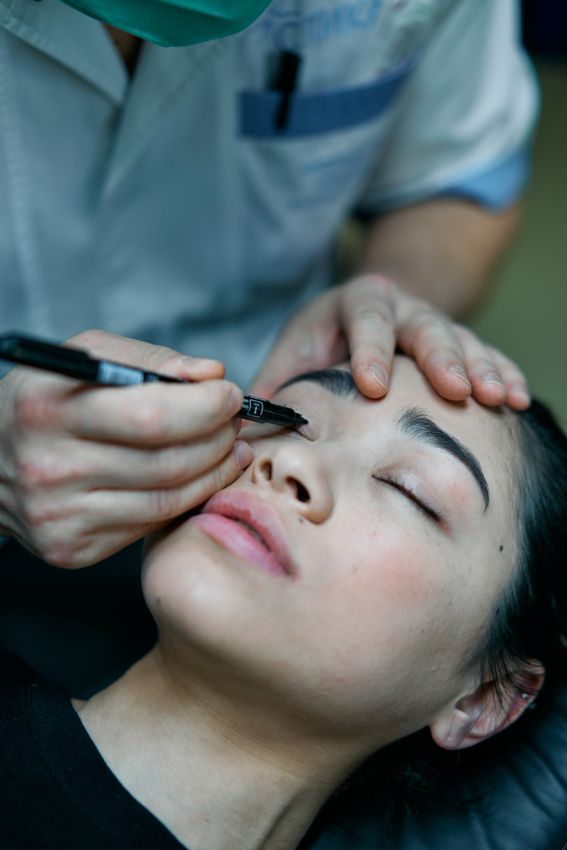
Upper Eyelid Aesthetics (Blepharoplasty)
Upper-lid blepharoplasty corrects sagging, puffiness and excess skin on the eyelid for both aesthetic and functional reasons. Here we explain why the lid droops, who the surgery suits and how the process works.