Why Myopia Is Rising in Children
The number of school-age children wearing glasses has risen sharply, and the most common reason is myopia. Here we explain, in plain language for parents, why it happens, how screens affect it, and what can be done.
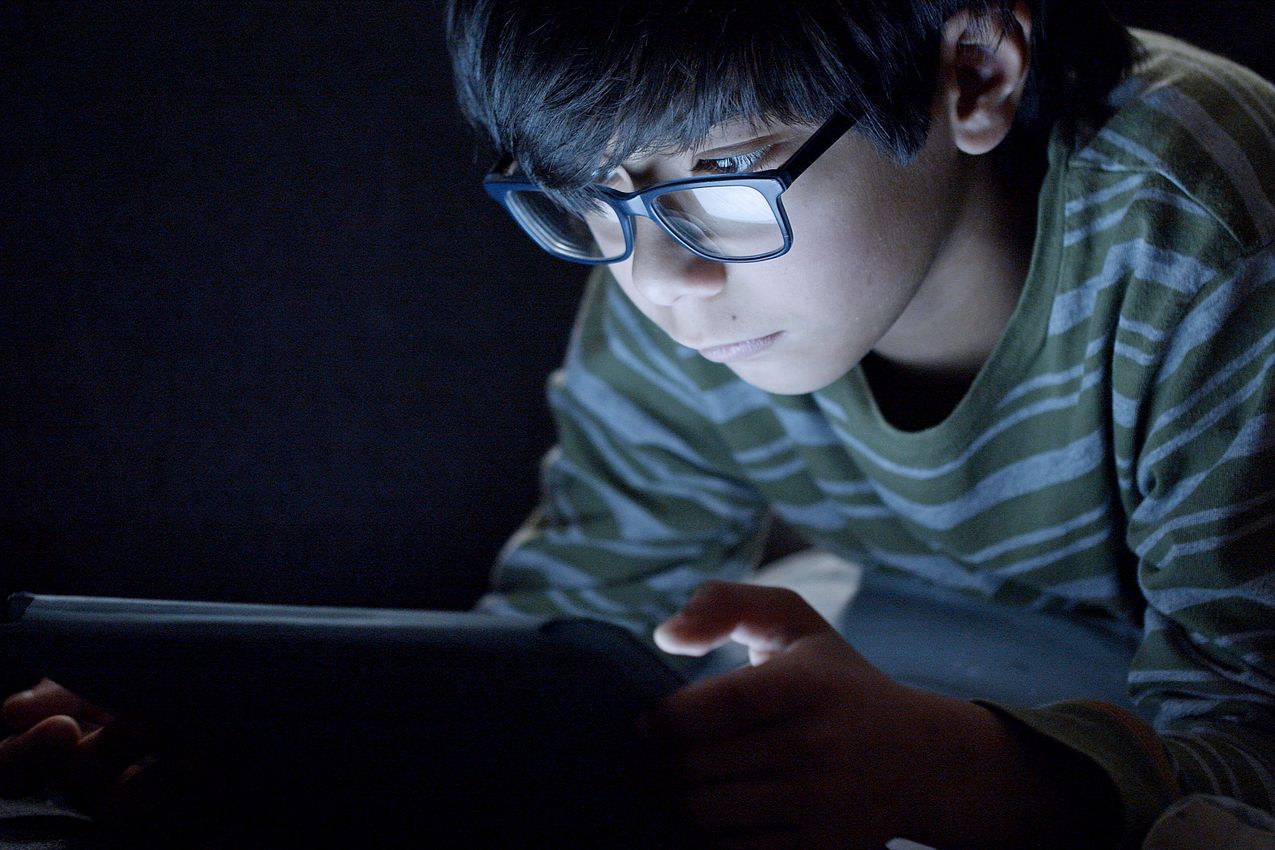
Why Is Myopia Rising in Children? How Does Screen Use Affect Eye Health?
In recent years there has been a serious increase in the number of school-age children who wear glasses. Complaints such as "can't see the board," "gets very close to the television," and "reads with the book right up against the nose" are heard much more often. The most common cause of these is myopia.
Myopia, the inability to see distant objects clearly, is no longer just genetic. Exposure to screens such as computers, tablets and phones, staying away from natural sunlight, and a digital lifestyle are causing myopia in children to begin at a much earlier age and to progress quickly. In this article I want to explain to mothers and fathers, in simple language, the causes of the rise in myopia in children, the effect of screens on the eyes, and the measures that can be taken.
What Is Myopia?
Myopia is the condition in which distant objects are seen as blurry and near objects clearly, because the eye is structurally longer than normal or its refractive power is too high. It can sometimes be hard to notice in children. But these clues are important: if the child looks at the television from very close, cannot read the writing on the board, constantly squints, complains of headache, or skips lines when reading. These can be early signs of myopia.
How Does Screen Use Trigger Myopia?
Screens have become an indispensable part of our children's lives. However, looking at a near distance for a long time, the eyes not focusing far enough, little exposure to daylight, and the eye muscles constantly working at close range: all of these together change the structure of the eye and increase myopia. In recent studies in America and Europe, the rate of myopia development in children whose screen time increased after the pandemic has doubled. In Japan and Taiwan, almost 9 out of every 10 children wear glasses because they are myopic.
What Should Parents Do?
Limit the child's screen time (a maximum of 1 to 2 hours a day), and have this broken up across the day. Have the child look at a distant point for 20 seconds every 20 minutes; in this way the focusing effort of the eyes will lessen and the eye will stop lengthening. If possible, support spending time outdoors in sunlight. At least 10 hours of outdoor play per week protects eye health. If the child rubs the eyes or has a headache, be sure to have an eye examination done.
When Should You See an Eye Doctor?
A first eye examination is recommended around the age of 3. The child should definitely be checked before starting school. If there is myopia in the family (especially mother or father), more frequent follow-up is needed; if one of the parents has myopia the risk is 25 percent, and if both do it is 60 percent. If complaints continue despite wearing glasses, the myopia may be progressing quickly.
Is Myopia Dangerous?
Myopia is not just about wearing glasses. As myopia grows, the risk of serious diseases such as cataract, glaucoma, retinal tear, a hole in the macula, and retinal detachment increases. That is why it is important to catch such children as early as possible.
Is It Possible to Stop Myopia?
Yes, it is now possible to slow the progression of myopia. With some treatment methods developed in recent years, great success is being achieved in stopping the rapid progression of myopia, especially in childhood.
Myopia Control Lenses
These spectacle lenses, developed specially for children, both provide clear vision and can reduce the progression of myopia by up to 50 percent. They are used in daily life like normal glasses, and the adjustment period is very short. Classic concave spectacle lenses sharpen the centre but cast the image reaching the periphery of the eye behind the retina. This creates a "I still need to grow" signal in the eye and myopia progresses. In the new-generation lenses there are hundreds of small-power defocus segments around the periphery of the lens. Thanks to these segments, the image falls in front of the retina.
Low-Dose Atropine Drops
This contains low-dose atropine (usually 0.01 percent) that works without enlarging the pupil or affecting vision. One drop is instilled every night at bedtime. It requires regular eye-doctor check-ups and use up to the age of 18.
Orthokeratology (Night Lenses) or Myopia Contact Lenses
Special lenses that the child wears while sleeping at night provide clear vision all day once removed in the morning. At the same time they stop the lengthening of the eye, that is, the progression of myopia. Hygiene is very important; they are effective in well-trained children and between -2 and -6 dioptres. The newly introduced myopia contact lenses are beneficial in suitable children.
7 Easy Tips to Protect Eye Health at Home
Have the child look far away (at least 6 metres) for 20 seconds every 20 minutes. Leave at least 40 cm between the screen and the eye. Prefer larger screens instead of tablets and phones, as small screens stimulate more focusing effort and increase myopia more. Let the child play outdoors at least 1 hour a day. The work desk should be close to the window, near activities should be done during the day, and work should be in good lighting; dim light can increase myopia. Sleep routine is very important; eye development continues during sleep. And as a parent, set an example: pay attention to your own screen use as well.
Frequently Asked Questions
Does wearing glasses increase myopia? No. On the contrary, not wearing glasses can cause eye strain and progression.
Do phone/tablet screens become harmless with a blue-light filter? A blue-light filter can increase eye comfort but does not prevent myopia. What matters is screen time and distance. Even television screens are more innocent than small screens.
My child does not want to wear glasses, what should I do? Colourful frames, hero-themed lenses, or models with cartoon characters motivate children more. Also get support from your doctor; sometimes contact lens or orthokeratology night lens alternatives can be tried.
A Final Word: My Recommendation as an Eye Doctor
Dear parents, and especially mothers: myopia is no longer just a genetic fate. By protecting our children from long screen times, helping them spend more time outdoors, and not neglecting regular eye examinations, we can make a great difference. Remember, your child being able to see the world clearly is possible not only with glasses but with your awareness.
Frequently asked questions
Why is myopia increasing so quickly in children?
Alongside hereditary risk, prolonged near work, excessive screen time and reduced outdoor light are major drivers. Reduced retinal dopamine and axial elongation contribute to faster progression.
What can parents do to slow myopia progression?
Encourage ≥2 hours/day outdoor play, limit continuous screen/near work with regular breaks (eg 20‑20‑20), ensure proper lighting and regular eye exams. For rapid progression, consider specialist‑guided options: low‑dose atropine, ortho‑K or myopia‑control lenses and retinal monitoring.

A Guide to Good Sleep
Good sleep may be the most wonderful medicine we give our bodies. Here we explain why sleep matters, what to avoid, and what to do for restful, restorative nights.

Ultraviolet Light and Its Harm to the Eye
Ultraviolet rays can harm the eye over both the short and long term. Here we explain what affects UV intensity, how it damages the eye, and how to protect yourself.
Upper Eyelid Aesthetics (Blepharoplasty)
Upper-lid blepharoplasty corrects sagging, puffiness and excess skin on the eyelid for both aesthetic and functional reasons. Here we explain why the lid droops, who the surgery suits and how the process works.