
What You Should Know About Eye Pressure
Eye pressure is the biggest risk factor for glaucoma, but a high reading does not on its own mean you have the disease. Here is what intraocular pressure really is and what we look at.
What is eye pressure?
It is more accurate to begin with what glaucoma is not. We can say that glaucoma ≠ (is not equal to) eye pressure. Although eye pressure is the biggest risk factor for glaucoma, intraocular pressure may not be high in every patient who has glaucoma.
Every eye has a pressure, that is, an intraocular pressure. The normal range for this pressure is 10–21. Not every elevated intraocular pressure is glaucoma. Moreover, a single high reading is not enough to make a diagnosis, because pressure can fluctuate during the day. In general, glaucoma is the damage caused by the pressure that a high, or near-high, intraocular pressure places on the optic nerve. To diagnose glaucoma, damage to the optic nerve (the optic nerve, the optic disc) must be demonstrated through tests or examination, or there must be a strong suspicion together with a powerful risk factor such as a family history. Just as there are individuals whose pressure is high but who do not have glaucoma (this condition is called ocular hypertension), there are also patients who have normal pressure (normal-tension glaucoma) yet receive a glaucoma diagnosis. In situations where there is impaired blood supply to the optic nerve or certain structural problems, the optic nerve can become more sensitive to pressure. For this reason, glaucoma can develop even at normal pressure.
Risk factors for glaucoma include a family history of glaucoma, diabetes, being over the age of 40, and the long-term use of cortisone (steroids), whether as eye drops or taken by mouth.
How does eye pressure form?
Intraocular pressure is the inner pressure that the fluid inside the eye, called aqueous humor, exerts on the eyeball, which is a closed sphere. Aqueous humor is produced in the ciliary body inside the eye. When the balance between the production of fluid inside the eye and its outflow is disrupted (that is, either production is excessive or outflow is reduced), pressure begins to rise, and this rise creates damage by pressing on the optic nerve.
What are the normal eye pressure values?
Every eye has a pressure, that is, an intraocular pressure. The normal range for this pressure is 10–21.
How is eye pressure or intraocular pressure measured?
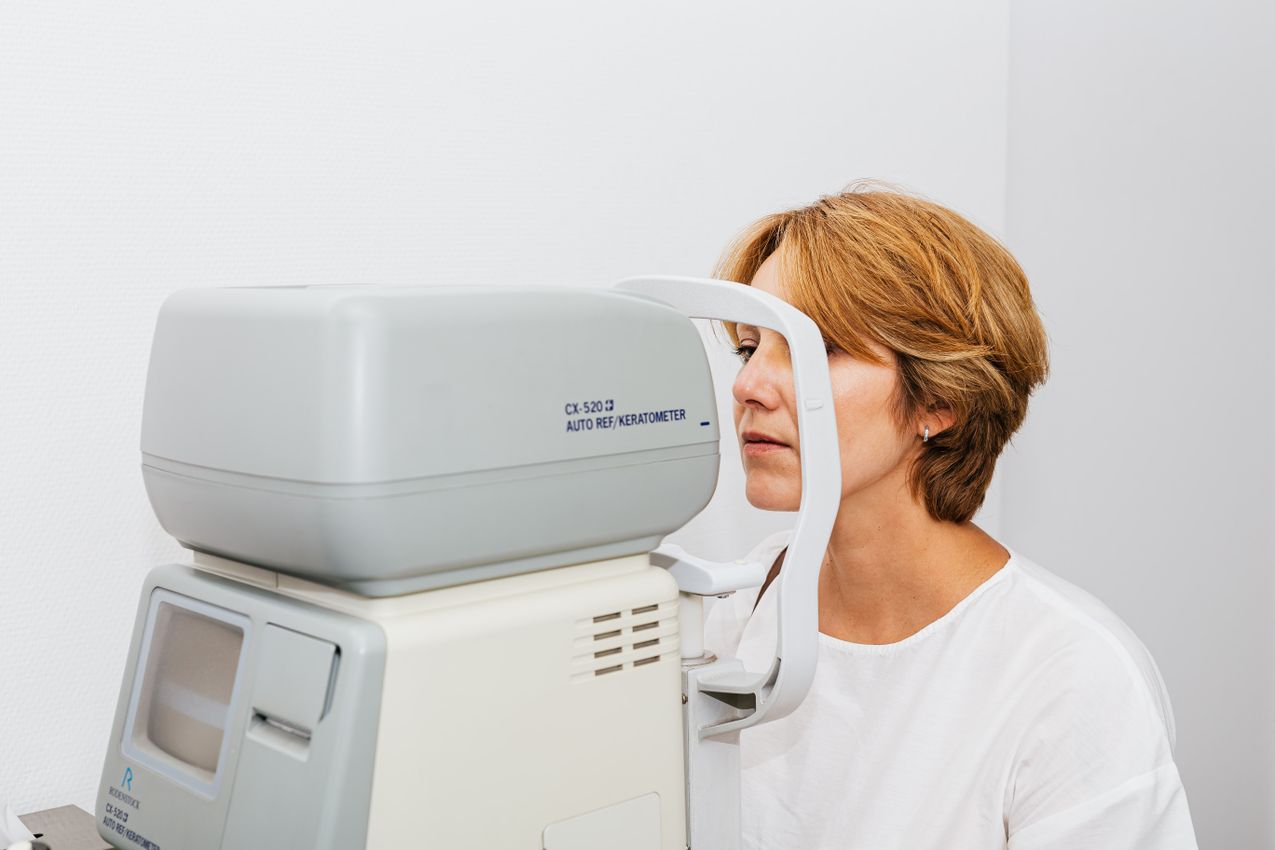
In most clinics, the patient who comes for an examination is measured with air-puff (non-contact) tonometer devices. This procedure does not touch the patient and is very suitable for screening, but in general the true eye pressure values are measured with devices that contact the eye (the Goldmann applanation tonometer).
Is every elevated eye pressure glaucoma?
No, it is not. Just as there are individuals whose eye pressure is high but who do not have glaucoma (this condition is called ocular hypertension), there are also patients who have normal pressure (normal-tension glaucoma) yet receive a glaucoma diagnosis.
What affects eye pressure? How does eye pressure go down?
This is one of the questions patients ask most, but there is not much a patient can do about it. Still, there are studies in some publications suggesting that doing the following for a healthy life may also lower your eye pressure.
Regular exercise: In patients with eye-pressure problems, regular exercise has been shown to slow the loss of vision. For this reason we recommend doing sport. However, in a special type of glaucoma called pigmentary glaucoma, strenuous sports should be avoided.
Meditation: It may lower pressure by reducing the stress hormone cortisol.
A diet rich in green, fibrous vegetables and fruit: People who eat fibrous foods have been shown to have a 20–30% lower risk of developing glaucoma. The nitrates in green vegetables are converted into nitric oxide and regulate eye pressure by increasing blood flow.
Quitting smoking.
Being at a healthy weight: In people with a high body mass index, the tendency toward diabetes increases, and in patients with diabetes the likelihood of glaucoma is greater.
Avoiding cortisone use: Cortisone use raises eye pressure, so patients with elevated eye pressure should not use cortisone-containing pills, ointments, or drops unless it is truly necessary.
Coffee and tea: Taking large amounts of fluid in a short time can cause sudden rises in pressure, so it is inadvisable. People can have these spread out across the day in moderate amounts.
Frequently asked questions
Does high eye pressure mean I have glaucoma?
No. Glaucoma requires optic nerve damage and/or visual field loss plus repeated IOP measurements. Retina specialists assess macula and optic nerve and coordinate care.
How is eye pressure measured and monitored?
With tonometry (Goldmann applanation, non‑contact) while accounting for corneal thickness, timing and medications. Retina experts monitor retinal/macular status and refer as needed.

A Guide to Good Sleep
Good sleep may be the most wonderful medicine we give our bodies. Here we explain why sleep matters, what to avoid, and what to do for restful, restorative nights.

Ultraviolet Light and Its Harm to the Eye
Ultraviolet rays can harm the eye over both the short and long term. Here we explain what affects UV intensity, how it damages the eye, and how to protect yourself.

Upper Eyelid Aesthetics (Blepharoplasty)
Upper-lid blepharoplasty corrects sagging, puffiness and excess skin on the eyelid for both aesthetic and functional reasons. Here we explain why the lid droops, who the surgery suits and how the process works.