
Smiling: The Cheapest and Most Natural Medicine
A smile is one of the smallest movements of the human face, yet it sets many of the body's systems in motion at once. We look at what science says about its effects on stress, the heart, immunity, and social life.

Smiling: the cheapest and most natural medicine
Scientific studies show that a smile can positively affect not only our mood but also our stress level, heart health, social relationships, and even our immune system. Smiling, one of the smallest movements on the human face, is in fact a powerful biological response that sets many of the body's systems in motion at the same time. Research has shown that smiling increases the release of certain "feel-good" chemicals in the brain. Neurotransmitters such as dopamine, serotonin, and endorphin increase the feeling of happiness while helping to reduce stress hormones.
A natural painkiller
Endorphins in particular are known to have a natural painkilling effect. For this reason, it has been shown that even when a person is not truly happy, the brain gives a positive response when they smile. A striking study by scientists from the University of Oxford in England demonstrated that laughing raises our pain threshold. The researchers found that, after a 15-minute laughter session, subjects watching comedy programs had on average a 10% increase in how long they could tolerate pain.
Smile to reduce stress
In a study at the University of Kansas that drew considerable attention in the psychology literature, individuals who smiled during stressful tasks were shown to have lower heart rates and to recover more quickly after stress. What is interesting is that even a person's consciously "forced" smile can produce this positive effect. In an experiment conducted in the United States, the level of stress hormones (cortisol, adrenaline) in the bodies of people who were expecting something funny dropped by 38% to 70%.
Heart-friendly, blood-pressure lowering
During smiling, as stress hormones decrease, the relaxation of blood vessels may increase and the load on the heart may ease. Some studies have shown that smiling and laughter may help lower blood pressure and may have a positive effect on the function of the endothelium, the inner lining of the vessels. For this reason, it is thought that positive emotions may have protective effects on heart health.
Strengthen your immunity
It is known that chronic stress suppresses the immune system. By reducing stress hormones, smiling and laughter may contribute to the immune system working in a more balanced way. Some research has noted that positive emotions may increase the activity of the immune cells that take part in fighting infections. It has been shown that the activity of T-lymphocytes (immune cells) increases and that the production of proteins such as gamma interferon, which fights viruses and tumors, rises. In this way, people who laugh regularly tend to have a lower risk of catching colds and the flu.
Can smiling extend life?
In an examination by American scientists of old baseball-team photographs, the players who smiled genuinely in the photo lived on average 79.9 years, those who smiled partially lived 75 years, and the serious-faced players who did not smile at all lived only 72.9 years. A 15-year Norwegian study published in April 2016 found that women with a strong sense of humor lived longer than others. They were even 73% less likely to die of heart disease and 83% less likely to die of infection. In men with a better sense of humor, only greater protection against infection was seen; men with a high humor score had a 74% lower risk of death.
Watch out! Smiling is contagious
The social effects of smiling are at least as valuable as its biological effects. Smiling strengthens our social relationships. And a good social environment is one of the greatest known sources of happiness and long life. Research shows that smiling triggers the same reward mechanism in our brain as eating 2,000 calories' worth of chocolate, both zero calories and free. People who smile are perceived as more trustworthy, warmer, and more approachable. The human brain tends to imitate the facial expressions in front of it; for this reason, smiling is "contagious." One person's smile can change the emotional atmosphere of the environment they are in. This is especially important for healthcare workers, teachers, and parents. A recent study at Uppsala University in Sweden confirmed this: it showed that looking at someone who is smiling suppresses the control we normally have over our facial muscles and brings about positive thoughts.
Scientific studies have reported that the physiological benefits of the genuine, sincere, real smile that lifts the corners of the mouth and crinkles the area around the eyes (called the "Duchenne smile") are more pronounced. Smiling is not only an action we perform because we are happy; it is also an action we perform in order to become happy.
Do not forget to smile, and do not withhold this beautiful expression from your loved ones. I wish you healthy days full of smiles.
Frequently asked questions
Does smiling directly affect retinal health?
Smiling does not change retinal anatomy directly. It reduces stress and sympathetic tone, lowering inflammation and improving microcirculation—factors that can indirectly benefit retinal vascular health.
Can smiling aid recovery after vitreoretinal surgery?
Positive mood can improve recovery, pain tolerance and adherence to postoperative care, but it does not replace surgical technique or medical follow-up. Always follow your surgeon's instructions.

A Guide to Good Sleep
Good sleep may be the most wonderful medicine we give our bodies. Here we explain why sleep matters, what to avoid, and what to do for restful, restorative nights.

Ultraviolet Light and Its Harm to the Eye
Ultraviolet rays can harm the eye over both the short and long term. Here we explain what affects UV intensity, how it damages the eye, and how to protect yourself.
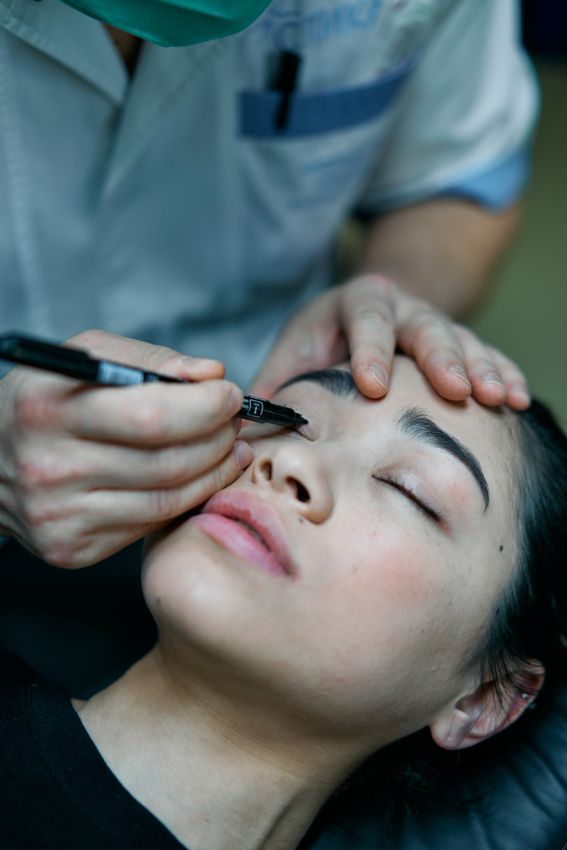
Upper Eyelid Aesthetics (Blepharoplasty)
Upper-lid blepharoplasty corrects sagging, puffiness and excess skin on the eyelid for both aesthetic and functional reasons. Here we explain why the lid droops, who the surgery suits and how the process works.