
Smart Lens Surgery
A procedure that replaces the eye's natural lens with an artificial smart lens to correct presbyopia and cataract and reduce dependence on glasses.
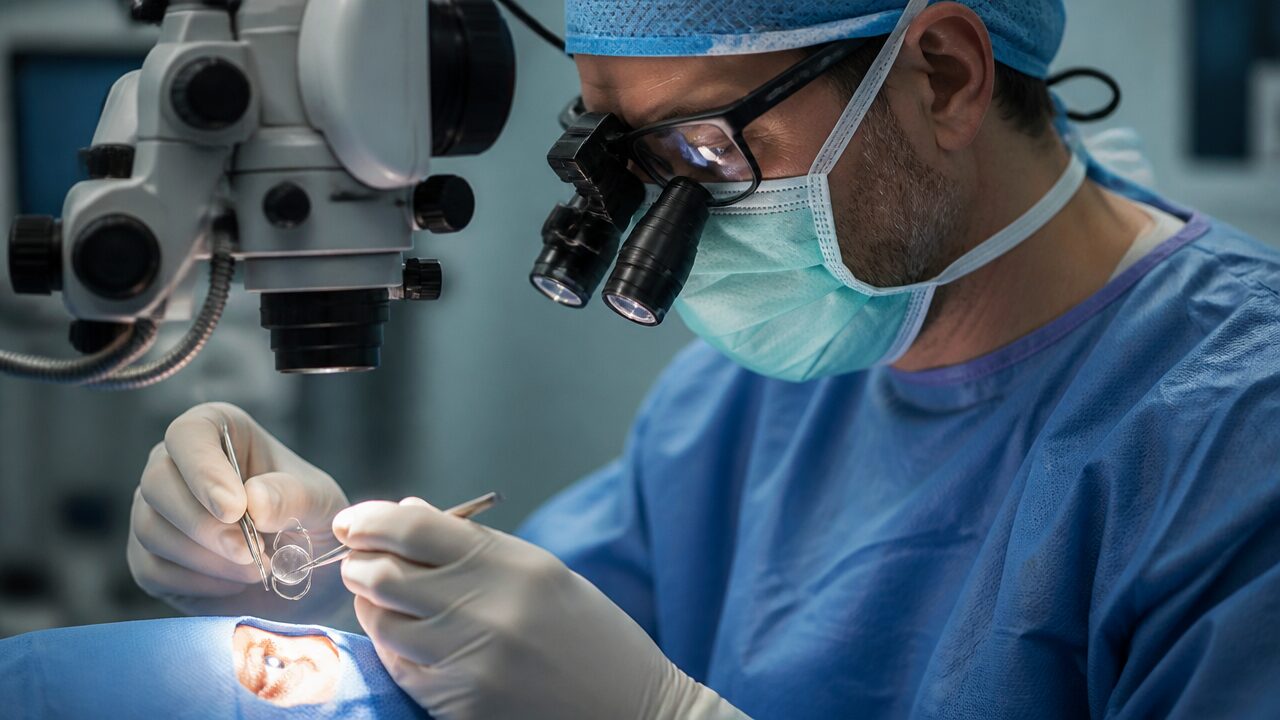
Smart lens surgery is a surgical procedure in which the eye's natural lens is replaced with an artificial lens (intraocular lens, IOL). This surgery is used especially in the treatment of presbyopia (inability to see near) and of cataract. Smart lenses allow clear vision both near and far, and can largely remove the need for glasses. For some people this is a very significant problem; in particular, above a certain degree, not being able to see at near and intermediate distances can turn into a real nightmare. The procedure is especially suitable for individuals who are motivated to be free of glasses and who have a high near-vision prescription.
Why Is Smart Lens Surgery Performed?
Cataract treatment: cataract is the clouding of the eye's lens. In this case the natural lens is removed and an artificial smart lens is placed in its stead.
Presbyopia (age-related near-vision impairment) treatment: in cases where the ability to see near is lost with age, a smart lens can correct both far and near vision at the same time.
Advantages of the Smart Lens
Both far and near vision: smart lenses (EDOF or trifocal lenses), thanks to their different focal points, offer the possibility of seeing both near and far clearly. Permanent solution: smart lenses are permanent and stay in the eye for life, so that even in later years the need for glasses does not arise again. Cataract does not develop: once a smart lens is placed, because the natural lens has been removed, the risk of cataract forming is eliminated.
How Is Smart Lens Surgery Performed?
Drop anaesthesia: the eye is numbed with drops and the patient does not feel pain during the procedure. Removal of the natural lens: a small incision is made in the eye and the clouded natural lens is removed by phacoemulsification (using ultrasound waves). Placement of the artificial lens: an artificial smart lens is placed where the natural lens was. This lens stays permanently in the eye and provides both near and far vision.
Recovery After Surgery
In the first days: in the first few days after surgery there may be mild discomfort, stinging and redness in the eye. Vision usually begins to improve right after the operation. Eye drops: eye drops are used to prevent infection and speed up healing: intensively in the first few days, then tapered. Follow-ups: regular doctor check-ups are carried out within the first few weeks after surgery.
Side Effects and Risks of Smart Lens Surgery
Halos: some patients may see rings of light around bright lights. Intraocular infection: although rare, there is a risk of infection. Light sensitivity: there may be sensitivity to light in the first days.
Smart lens surgery is an effective and lasting solution that helps people who have cataract or presbyopia become free of glasses. It aims for a good outcome in most patients, and recovery is usually quick. Before surgery the structure of the eye is examined in detail and it is determined whether the patient is suitable for a smart lens.
This page is for general information and does not replace a personal examination. The right approach is decided together after an eye examination.
Frequently asked questions
Who is a candidate for smart lens surgery?
Patients with presbyopia and/or cataract and relatively healthy macula/retina are best suited. Active macular disease or significant diabetic retinopathy can limit benefits and require retinal management first.
What is the recovery time and expected outcome?
Initial visual improvement occurs within days; full stabilization may take weeks to months. Smart lenses often reduce dependence on glasses for near and distance tasks, though occasional spectacles or enhancement procedures can be needed.