
Ptosis Surgery
A surgical procedure that lifts a drooping upper eyelid back to its normal position to improve both vision and appearance.
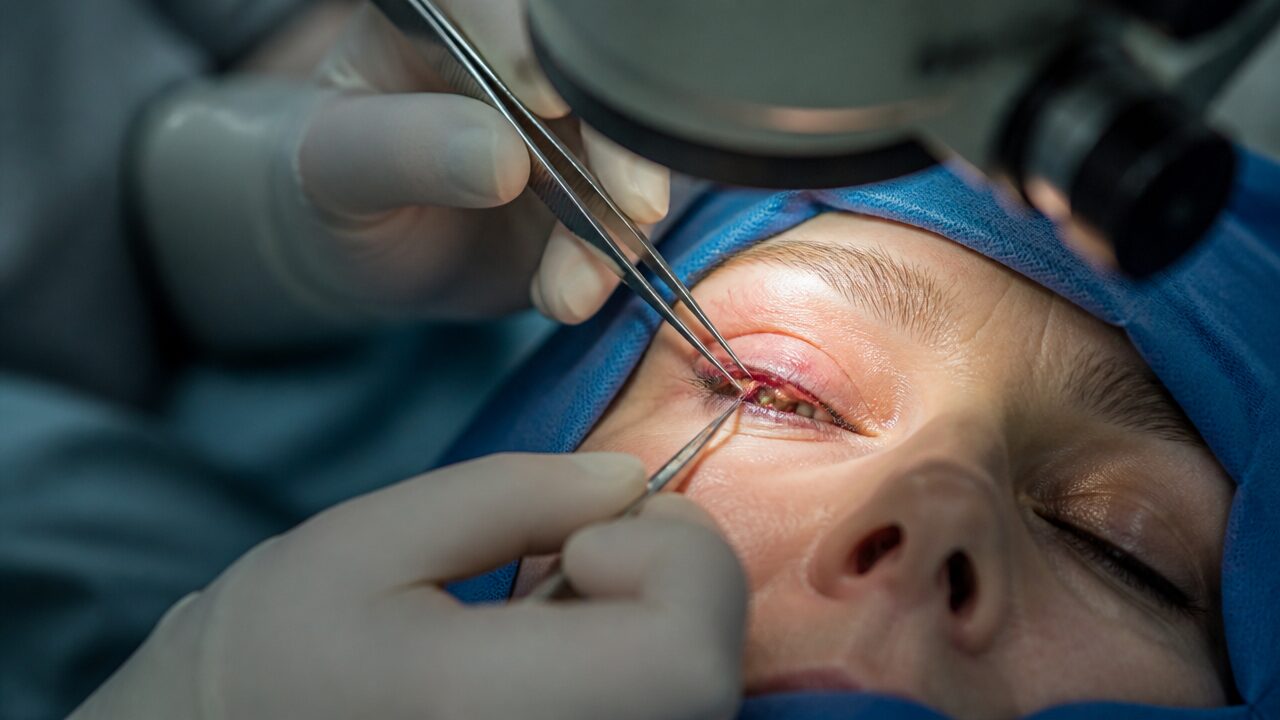
Ptosis surgery (drooping eyelid surgery) is a surgical procedure used to treat situations in which the upper eyelid sits lower than it should. Ptosis usually develops because the muscle that lifts the upper eyelid weakens or loses its function, and it can cause both aesthetic and functional problems. Severe ptosis can narrow the field of vision and affect sight. Ptosis surgery is performed to correct this problem and to bring the eyelid back to its normal level.
What Causes Ptosis (Drooping Eyelid)?
Age-related muscle weakness: with ageing, the muscle that lifts the eyelid (the levator muscle) can weaken over time. Congenital ptosis: in some people ptosis is present from birth and usually results from a developmental problem of the muscle that lifts the eyelid. Trauma: injuries around the eye or surgical procedures can weaken the muscles. Neurological conditions: nerve damage or neurological diseases can cause ptosis.
How Is Ptosis Surgery Performed?
Anaesthesia: the operation is usually performed under local anaesthesia, though in some cases general anaesthesia may also be used.
Strengthening the levator muscle: the levator muscle that lifts the upper eyelid is strengthened or shortened. This pulls the eyelid further up.
Frontal sling technique: in some cases, if the levator muscle does not work sufficiently, the eyelid is suspended by attaching it to muscles taken from the forehead. This technique is used especially in congenital ptosis cases.
Sutures: after the procedure the eyelid is aligned and closed with small sutures. The sutures are usually hidden in the eyelid crease, so they are not visible.
Recovery After Surgery
Recovery time: healing is usually achieved within a few weeks after surgery. There may be mild swelling and bruising, but these resolve in a short time. Eyelid function: there may be mild discomfort in the eyelid after surgery, but over time this resolves and the eyelid returns to its normal function. Eye drops: eye drops may be used after surgery to prevent infection and speed up healing. Suture removal: sutures are usually removed within a week, or self-dissolving sutures are used.
Risks of Ptosis Surgery
Eyelid asymmetry: rarely, there may be slight asymmetry between the eyelids after surgery. Under- or over-correction: the eyelid may not be raised enough by surgery, or it may be raised too much, causing difficulty in closing. In this case an additional intervention may be needed. Dry eye: when the eyelid does not close properly, dry eye can occur, and artificial tears may then be needed. Infection: as with any surgical procedure there is a risk of infection, but this risk is low and treatable.
Who Is It Suitable For?
Those who have problems in their field of vision because of a drooping eyelid; those who are bothered aesthetically; and those who have congenital or age-related sagging of the eyelids.
Conclusion
Ptosis surgery is a procedure performed to improve both appearance and visual function. It aims to provide recovery generally without serious side effects. People whose daily quality of life is affected by a drooping eyelid can gain better vision with this surgery and can achieve a more youthful appearance.
This page is for general information and does not replace a personal examination. The right approach is decided together after an eye examination.
Frequently asked questions
Who is a candidate for ptosis surgery?
Patients—adult or pediatric—whose upper eyelid droop obstructs the visual axis or causes significant cosmetic concern. We evaluate for neurological and retinal contributors before surgery.
What is the recovery time and main risks?
Recovery includes swelling and bruising; vision may be temporarily blurred. Most patients stabilize in weeks. Risks include under/overcorrection, asymmetry, infection; our retina team ensures posterior segment safety.