
Non-Surgical Eyelid Aesthetics
Non-surgical and minimally invasive methods used to treat sagging, wrinkles, puffiness and laxity around the eyelids without an operation.
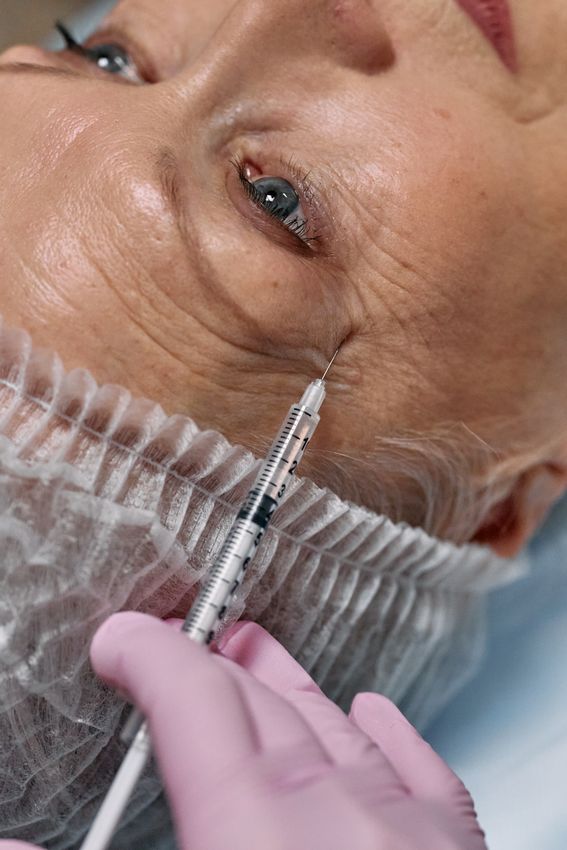
Non-surgical eyelid aesthetics refers to aesthetic methods applied to treat sagging, wrinkles, puffiness and laxity in the eyelid area without a surgical procedure. These treatments are carried out with non-invasive or minimally invasive techniques to rejuvenate the eyelids and improve the appearance around the eyes. Non-surgical eyelid aesthetics is becoming increasingly popular because of its quick recovery time and lower risk. In cases of advanced sagging, surgery may definitely be needed after an examination by your eye doctor, but in some mild to moderate cases eyelid aesthetics can be performed without surgery.
Here are the most common non-surgical eyelid aesthetic methods.
Plasma Energy Eyelid Aesthetics (Plasma Pen, Plexr)
How does it work? Plasma energy delivers small, pinpoint heat pulses to the skin surface, which causes the skin to contract and tighten. By increasing collagen production in the eyelid skin, plasma energy helps improve sagging.
Advantages: It addresses eyelid sagging without surgery. The recovery time is quite short and it is generally well tolerated, with minimal side effects apart from mild swelling and redness.
Who is it suitable for? It is suitable for people with mild to moderate eyelid sagging. It can be applied to the lower or upper eyelid.
Botox (Botulinum Toxin)
How does it work? Botox injection temporarily relaxes the muscles around the eyes and reduces wrinkles. On the upper eyelid it can also slightly lift the brows, helping the eyelids look younger.
Advantages: Wrinkles and sagging can be corrected temporarily without the need for surgery. It is a quick treatment method that does not require a recovery period. In some cases with forehead wrinkles in particular, it also reduces forehead pain.
Who is it suitable for? It is suitable for people who want to reduce fine wrinkles around the eyes and treat mild eyelid sagging.
Fillers
How does it work? Hyaluronic acid based fillers are injected around the eyes and under the eyes to address eye bags and hollows. They also restore lost volume beneath the skin, giving a younger appearance.
Advantages: They correct problems such as wrinkles and under-eye bags without surgery.
Who is it suitable for? It is suitable for people with under-eye hollowing, bags and fine lines in the eyelid skin.
Laser Treatments
How does it work? Laser treatments renew the upper layer of the skin, stimulate collagen production and help the skin tighten. They provide skin renewal and tightening.
Advantages: It is a non-surgical option that tightens the skin and reduces wrinkles and sagging around the eyes. It also renews the skin.
Who is it suitable for? People with mild sagging and wrinkle complaints.
Thermage (Radiofrequency Treatment)
How does it work? Radiofrequency technology heats the collagen layer beneath the skin to provide tightening. This procedure rejuvenates and tightens the skin around the eyes.
Advantages: It offers a slow and natural recovery process. It is a non-invasive method that is completed in a short time.
Who is it suitable for? It is an ideal treatment option for mild sagging and wrinkles.
PRP (Platelet Rich Plasma)
How does it work? Platelet-rich plasma obtained from the patient's own blood is injected around the eyes to provide skin renewal and tightening. This triggers a natural skin healing process.
Advantages: It provides natural healing and rejuvenation. Its side effects are minimal.
Who is it suitable for? People who want to encourage skin renewal and are interested in natural treatment methods.
Summary
Non-surgical eyelid aesthetics is ideal for people looking for a solution that does not require surgical intervention and needs only a short recovery time. To determine which treatment method is suitable for you, your eye doctor needs to carry out a detailed evaluation.
This page is for general information and does not replace a personal examination. The right approach is decided together after an eye examination.
Frequently asked questions
Can I have non-surgical eyelid treatment if I have macular disease or prior retinal surgery?
Often yes, after evaluation by a retina specialist. Treatments are planned with retinal safety in mind; active disease or recent intraocular procedures may require postponement or modification.
How long do non-surgical eyelid results last?
Duration varies by modality: Botox 3–4 months, fillers 6–18 months, RF/laser 12–36 months, thread lifts 12–24 months. Maintenance treatments and retina follow‑up are recommended.