
Eyelid Tumor or Mass Surgery
Surgical removal of benign or malignant growths on the eyelid, with reconstruction to preserve the lid's natural form.
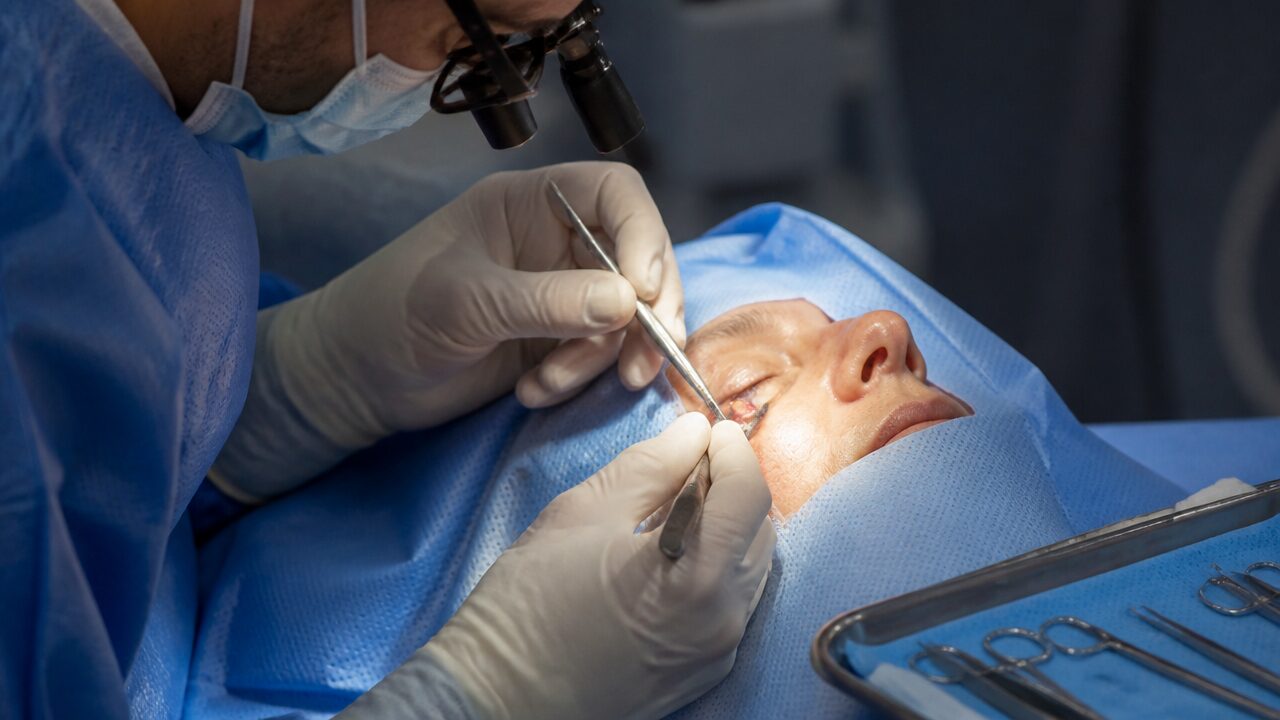
Tumors or masses that appear on the eyelid can negatively affect both eye health and appearance. These masses may be benign or malignant. Tumors that develop on the eyelid usually grow slowly and are most often harmless, but when a mass is malignant, early diagnosis and treatment are of vital importance. Tumors arising on the eyelid are treated by surgical removal. This surgical procedure may vary according to the type and size of the tumor and its location on the eyelid.
Types of Eyelid Tumors
Benign Tumors
Papilloma usually appears as small, wart-like, generally harmless projections on the eyelid. It can often be cosmetically bothersome but does not pose a serious threat. Hemangioma is a reddish benign tumor originating from blood vessels, most often seen in children. Xanthelasma describes yellowish, plaque-like lesions that form as a result of fat deposits on the eyelids; these are usually harmless but can be cosmetically bothersome.
Malignant Tumors
Basal cell carcinoma is the most common malignant tumor of the eyelid. It tends to grow slowly, but if left untreated it can damage surrounding tissues. Squamous cell carcinoma is a more aggressive tumor type that can grow rapidly and tends to spread to neighboring tissues. Sebaceous gland carcinoma is a rare but dangerous eyelid tumor that originates from the oil glands. Malignant melanoma is a dangerous form of cancer that presents with a change in skin color and growth, and has the potential to spread rapidly.
Signs of an Eyelid Tumor
When a tumor or mass forms on the eyelid, the following signs may be noticed: an abnormal mass or swelling on the eyelid; persistent redness or irritation of the eyelid; watering or discharge from the eye; deformation or asymmetry of the eyelids; pain or discomfort in the eyelid; sores or crusting that do not heal; and itching or tenderness of the eyelid.
When any of these signs is observed, it is important to consult an eye doctor, because early diagnosis is of vital importance in treating tumors.
How Is Eyelid Tumor or Mass Surgery Performed?
When a mass is detected on the eyelid, surgical removal of the mass or tumor may be necessary. This surgical procedure is carried out with different methods according to the size and type of the tumor and its location on the eyelid. In general, masses on the lid are benign, and for some of them pathology examination is not required. However, masses suspected of being malignant on examination, based on color, shape, size and so on, are always sent for pathology examination.
Stages of the Surgery
Anesthesia: The surgery is usually performed under local anesthesia, which numbs only the area around the eye. General anesthesia may be needed for larger masses. Removal of the tumor: The surgeon removes the tumor and the healthy tissue around it. If the tumor is malignant, it may need to be removed together with a safe margin around it; this is done to ensure that the cancer cells are completely cleared.
Tissue repair and reconstruction: The eyelid is a structure that is important both aesthetically and functionally. After the tumor is removed, the gap or deformation that forms in the eyelid is repaired with reconstructive surgical techniques. Small defects are closed with simple sutures, while a skin graft or flap (shifting tissue from around the eye) may be needed for larger gaps. Sutures: After the tumor is removed, the wound on the eyelid is carefully sutured. The sutures are placed so as to preserve the natural shape of the eyelid, and they are usually removed within a few days or self-dissolving sutures are used.
Recovery After Surgery
The recovery process after surgery can vary depending on the extent of the surgery and the techniques used. The following are generally experienced after eyelid surgery.
The First Days
Swelling and bruising: There may be swelling and bruising on the eyelid after surgery, which usually decreases within a few days. Mild pain in the eyelid: There may be mild pain and discomfort after surgery; your doctor may prescribe pain relievers to ease this. Vision changes: In the first days there may be slight blurred vision or watering of the eye; this is temporary and improves as the eye heals.
Care and Medications
Eye drops and ointment: Your doctor may prescribe antibiotic eye drops or ointment to prevent infection and speed healing. Removal of sutures: Sutures are usually removed within 7-10 days. If self-dissolving sutures were used, they do not need to be removed.
Long-Term Healing
Aesthetic results: Eyelid surgeries can have significant aesthetic outcomes. The surgeon repairs the eyelid as naturally and smoothly as possible. However, depending on the size of the tumor, a faint scar may remain on the eyelid. Follow-up examinations: For malignant tumors, regular follow-up examinations after surgery are important. Your doctor monitors you closely to help ensure the tumor does not recur.
Risks of the Surgery
Like any surgical procedure, eyelid tumor or mass surgery can carry certain risks. However, these risks are generally low and can be minimized with proper surgical techniques.
Do Not Delay Tumor and Mass Surgery
Any tumor or mass detected on the eyelid, whether benign or malignant, should be evaluated without losing time. Malignant tumors in particular have a much higher chance of treatment when caught at an early stage. For this reason, it is important to consult an eye doctor immediately when you notice an abnormal change in your eyelid.
This page is for general information and does not replace a personal examination. The right approach is decided together after an eye examination.
Frequently asked questions
When is eyelid tumor surgery indicated?
Surgery is indicated for suspicious, enlarging, symptomatic or vision‑threatening lesions; excision with biopsy and histopathology confirms diagnosis and margins.
Will the procedure affect my vision or retina?
Typically it does not impair vision or the retina. Procedures focus on preserving eyelid function and ocular surface; we coordinate with retina and oculoplastic specialists when needed.