
Dermoid Cyst Excision
Complete surgical removal of a usually benign dermoid cyst around the eye to relieve cosmetic and functional problems and prevent regrowth.
What Is a Dermoid Cyst?
A dermoid cyst is a usually benign type of cyst that develops under the skin. These cysts form when some cells remain in the wrong place during embryonic development, and they can contain different tissue types such as skin, hair, teeth and cartilage. Dermoid cysts can appear in various parts of the body, but they are seen more often in regions such as the face, head, neck and around the eye. Dermoid cysts that form around the eye (in the eyelid or orbit) are usually present from birth and can grow over time.
Although the fact that dermoid cysts are not malignant generally means they are not a serious threat, when they grow they can lead to cosmetic and functional problems. For this reason, dermoid cysts may need to be surgically removed for both aesthetic and health reasons.
Signs of a Dermoid Cyst
Dermoid cysts usually do not show obvious symptoms and grow slowly. However, as they grow, the following signs may appear: a slowly growing, round, soft or firm swelling under the skin; an absence of pain over the swelling (most dermoid cysts are painless); a mass that can cause cosmetic discomfort around the eye (if the cyst is around the eye); and, as the cyst grows, slight discomfort or fullness in the movements of the eyelid.
Dermoid cysts are usually not malignant, but they can create aesthetic and functional discomfort. A dermoid cyst around the eye can press on the visual field or create a risk of infection.
What Is Dermoid Cyst Excision?
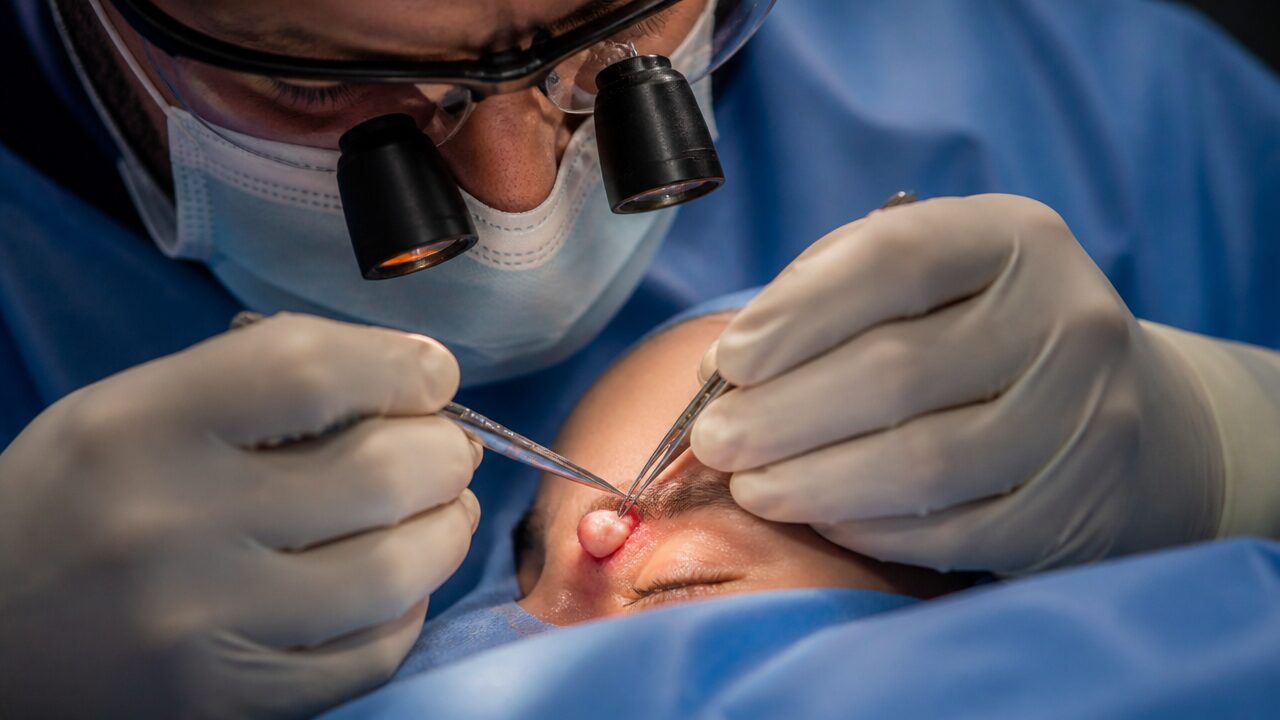
Dermoid cyst excision is the procedure of completely removing the dermoid cyst surgically. This procedure is carried out by opening the skin tissue in the area where the cyst is located and removing the cyst. Dermoid cysts located around the eye in particular may require surgical intervention because they can lead to aesthetic and functional problems. The aim of the surgery is the complete removal of the cyst and the preservation of the natural structure of the affected area.
How Is Dermoid Cyst Excision Performed?
Dermoid cyst excision is usually a simple surgical procedure and in most cases is performed under local anesthesia. The procedure is carried out in several steps.
Stages of the Surgery
Anesthesia: the surgery is usually performed under local anesthesia. The area where the cyst is located is numbed, so the patient does not feel pain during the procedure. If the cyst is very large or in pediatric patients, general anesthesia may be preferred. Making the incision: the surgeon makes a small incision in the skin in the area where the cyst is located. This incision is kept as minimal as possible depending on the size and location of the cyst. Removal of the cyst: the cyst and the surrounding tissues are carefully removed. Complete removal of the cyst is very important, because if the cyst is not entirely removed it can grow again; care must be taken during this process not to damage the healthy tissues around it.
Sutures: after the cyst is removed, the skin is carefully sutured. The sutures are placed aesthetically so that the scar remains minimal. Final check and dressing: after the sutures are placed, the area is dressed and the surgery is completed. The patient can usually return home the same day.
Recovery After Surgery
Recovery after dermoid cyst excision is usually rapid and complications are rare. The recovery time depends on the size of the cyst, the area from which it was removed and the patient's general health.
The First Days
Swelling and bruising: there may be slight swelling and bruising in the area after surgery, which usually decreases within a few days. Pain and discomfort: mild pain or discomfort may be felt in the first days; the pain relievers prescribed by the doctor can ease this. Vision: if the cyst was removed around the eye, there may be short-term mild blurred vision or discomfort in the eye, but this is temporary.
Care and Dressing
Suture care: the sutures in the surgical area should be kept clean. Your doctor will give instructions about wound care. Sutures are usually removed within 5-7 days, or if self-dissolving sutures were used, they are absorbed by the body. Eye drops or ointment: if the surgery was performed around the eye, the doctor may prescribe antibiotic eye drops or ointment to prevent infection and speed healing.
Follow-Up
After the surgery the doctor may schedule a few follow-up appointments to monitor the healing of the area. At these check-ups it is verified whether the wound is healing properly.
Benefits of Dermoid Cyst Excision
Complete removal of the cyst: dermoid cyst excision ensures complete removal of the cyst and eliminates the risk of regrowth. Aesthetic correction: cysts located around the eye in particular can create cosmetic discomfort; this surgery improves the aesthetic results. Relief of discomfort: as the cyst grows it can lead to functional problems; surgical intervention helps eliminate a cyst that creates discomfort in eye movements or the visual field.
Risks of the Surgery
Dermoid cyst excision is usually a safe procedure, but as with every surgical procedure there are some risks. Infection: there is a risk of infection developing in the surgical area, but this risk is minimized with the antibiotics recommended by the doctor. Bleeding or bruising: there may be temporary bleeding and bruising in the surgical area. Scarring: as with every surgical procedure, a small scar may remain, but this fades or decreases over time. Regrowth: if the cyst is not completely removed, the dermoid cyst can grow again; for this reason the surgeon must be sure that the cyst has been entirely removed.
Do Not Delay Dermoid Cyst Treatment
Dermoid cysts usually grow slowly and are not malignant, but when they grow they can lead to aesthetic and functional problems. If you notice swelling under the skin, discomfort or an abnormal mass around the eye, it is important to consult an eye doctor. Early diagnosis and treatment prevent the cyst from growing and possible complications.
This page is for general information and does not replace a personal examination. The right approach is decided together after an eye examination.
Frequently asked questions
Is dermoid cyst excision safe and what anesthesia is used?
It is generally safe. Superficial cysts are often excised under local anesthesia as an outpatient; deeper or orbital lesions may require general anesthesia and advanced microsurgical technique.
Will the surgery affect my vision or retina?
Periocular dermoids rarely affect the retina or macula. We perform full ocular assessment and imaging; our vitreoretinal surgeons coordinate care if posterior segment involvement is suspected.