
Corneal Cross-Linking for Keratoconus
A minimally invasive procedure that strengthens the cornea with riboflavin and UV-A light to halt the progression of keratoconus.
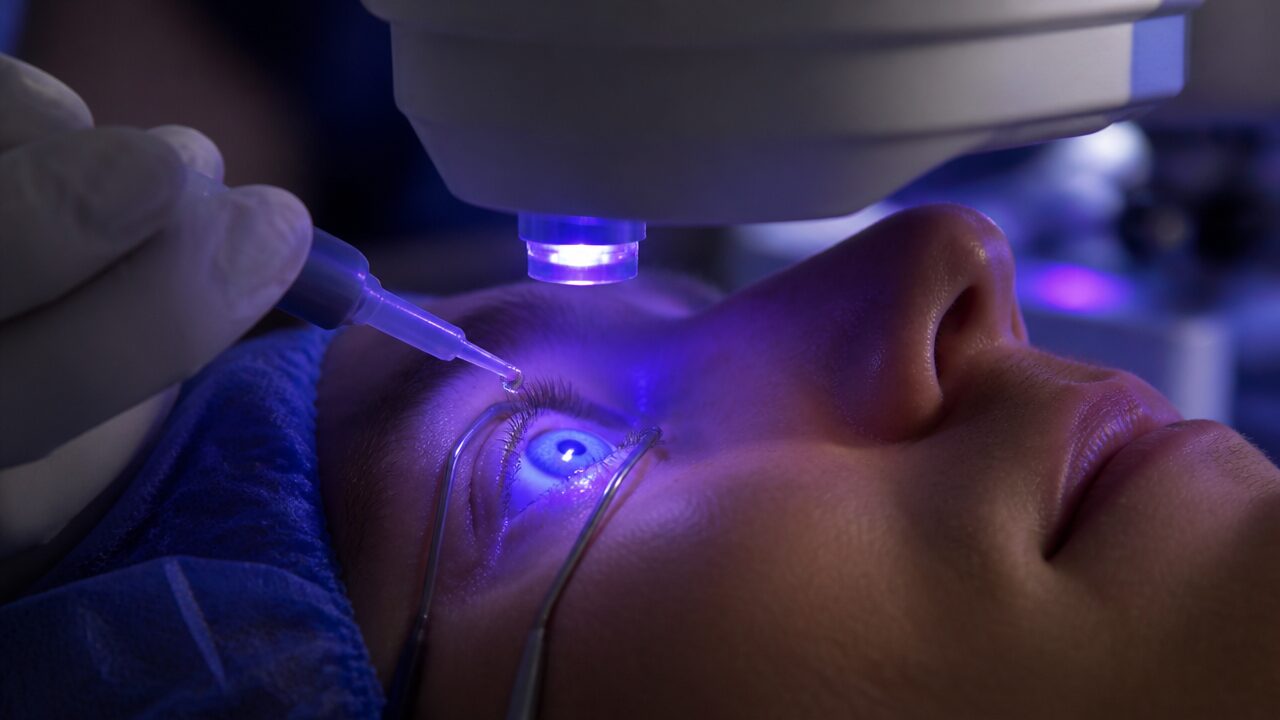
Keratoconus is a progressive eye disease in which the cornea thins and takes on a conical shape, bulging outward. The shape of the cornea is normally round and ensures that light is focused properly inside the eye. However, in keratoconus the cornea takes on an irregular shape because it thins, and this leads to vision disorders. This condition usually begins at a young age and can progress over time. In advanced stages it can cause vision loss. Keratoconus usually develops in both eyes and presents with symptoms such as astigmatism, blurred vision and sensitivity to light. If left untreated, it can lead to serious vision problems and may require advanced treatments such as corneal transplantation.
What Is Cross-Linking Treatment?
Cross-linking is a treatment method used to stop the progression of keratoconus. In this treatment, the collagen fibers in the structure of the cornea are made to bond more tightly to one another, aiming to strengthen the cornea. Cross-linking is one of the most effective methods used to halt the progression of keratoconus. With this treatment, the thinning of the cornea and its taking on an irregular shape is slowed or stopped.
How Is Cross-Linking Treatment Performed?
Cross-linking treatment is usually a minimally invasive procedure that strengthens the cornea in the eye. The procedure is carried out in the following steps.
Treatment Stages
Preparation: before starting the treatment, the eye is numbed with local anesthetic drops, so that the patient does not feel pain or discomfort during the procedure. Removal of the epithelium: the epithelium, the outermost layer of the cornea, is carefully removed with a special instrument. This step is done so that the riboflavin solution used can penetrate the cornea better. In some techniques cross-linking can be performed without removing the epithelium (the epi-on technique), but the method in which the epithelium is removed (epi-off) is considered more common and more effective.
Riboflavin application: riboflavin (vitamin B2) solution is dripped onto the cornea. Riboflavin makes the cornea more sensitive to UV rays and thereby helps cross-links form in the cornea. This solution is applied at regular intervals for about 30 minutes. UV light application: after riboflavin is applied, the eye is exposed to a low dose of UV-A rays. This process takes about 10-30 minutes. The UV light interacts with the riboflavin to strengthen the cross-links of the collagen fibers in the cornea and make the cornea harder and more durable. Final check and dressing: after the procedure is completed, the eye is checked. The eye surface is covered with a protective lens and the healing process begins. Eye drops and antibiotic treatment are usually prescribed.
Benefits of Cross-Linking Treatment
The most important benefit of cross-linking treatment is that, by halting the progression of keratoconus, it aims to prevent more serious vision disorders and the need for advanced treatments such as corneal transplantation. Other benefits are as follows. Halting progression: it stops or slows the progression of keratoconus, which helps the patient preserve their quality of vision. Minimally invasive procedure: it is a minimally invasive method that does not require surgery, and the recovery process is usually rapid. Preventing future treatments: the treatment reduces the need for more invasive procedures such as corneal transplantation.
Recovery After Treatment
The recovery time after cross-linking treatment can vary from person to person, but healing is usually seen in the eye within a few days to a few weeks.
The First Days
Discomfort in the eye: during the first few days after treatment there may be stinging, watering and sensitivity to light in the eye. These symptoms are usually temporary. Vision changes: there may be blurriness or mild discomfort in vision, but this improves during the healing process.
Care and Use of Eye Drops
Antibiotic and steroid eye drops: your doctor will prescribe eye drops to prevent infection and speed healing. Regular use of these drops is very important. Protective lens: a protective contact lens may be used for a few days to speed the healing process in the eye. This lens protects the eye surface from external factors.
Follow-Up
Your doctor will schedule a few follow-up appointments to monitor the condition of your eye after treatment. At these check-ups, the healing process of the eye and the effects of the treatment are evaluated.
Risks of Cross-Linking Treatment
As with every medical procedure, cross-linking treatment can also have some risks, but these are usually low-risk and mild side effects. Infection: the risk of infection after treatment is rare, but this risk is minimized with eye drops. Sensitivity to light: sensitivity to light may increase in the first few days after treatment, but this is usually temporary. Vision loss: in very rare cases patients may experience temporary vision loss or a slight decrease in vision quality. However, this usually improves over time.
Do Not Postpone Cross-Linking Treatment
Because keratoconus is a progressive disease, early diagnosis and treatment are of great importance. Cross-linking treatment is an effective solution for halting the progression of keratoconus and preventing vision loss. If you have been diagnosed with keratoconus, the earlier you begin treatment, the better the results you can obtain.
This page is for general information and does not replace a personal examination. The right approach is decided together after an eye examination.
Frequently asked questions
Who is a candidate for corneal cross‑linking?
Patients with documented progressive keratoconus without dense scarring are primary candidates. Standard epi‑off CXL generally requires a stromal thickness of ≥400 µm; each case receives premium tomography and retinal evaluation.
What are the procedure duration, recovery and expected outcomes?
Procedure time is about 30–60 minutes. Early discomfort and blurred vision are common; corneal stabilization is expected within weeks, with visual improvement over months. Contact lens fitting is reassessed after corneal healing.